At Filterbuy.com, we’ve seen firsthand how smoke exposure—from wildfires, tobacco, or even frequent stovetop cooking—can silently degrade your indoor air quality. That’s why our team doesn’t just recommend filters based on specs—we test them in real homes, under real smoke conditions. Our top picks for 10x30x4 air filters aren’t just high performers on paper; they’ve been proven to capture fine smoke particles, neutralize odor, and extend HVAC system life where it matters most: in everyday households like yours. In this guide, we’ll share the exact filters we trust, what makes them different, and why homeowners dealing with smoke consistently choose them for long-term relief and peace of mind.
Quick Answers
10x30x4 Air Filters
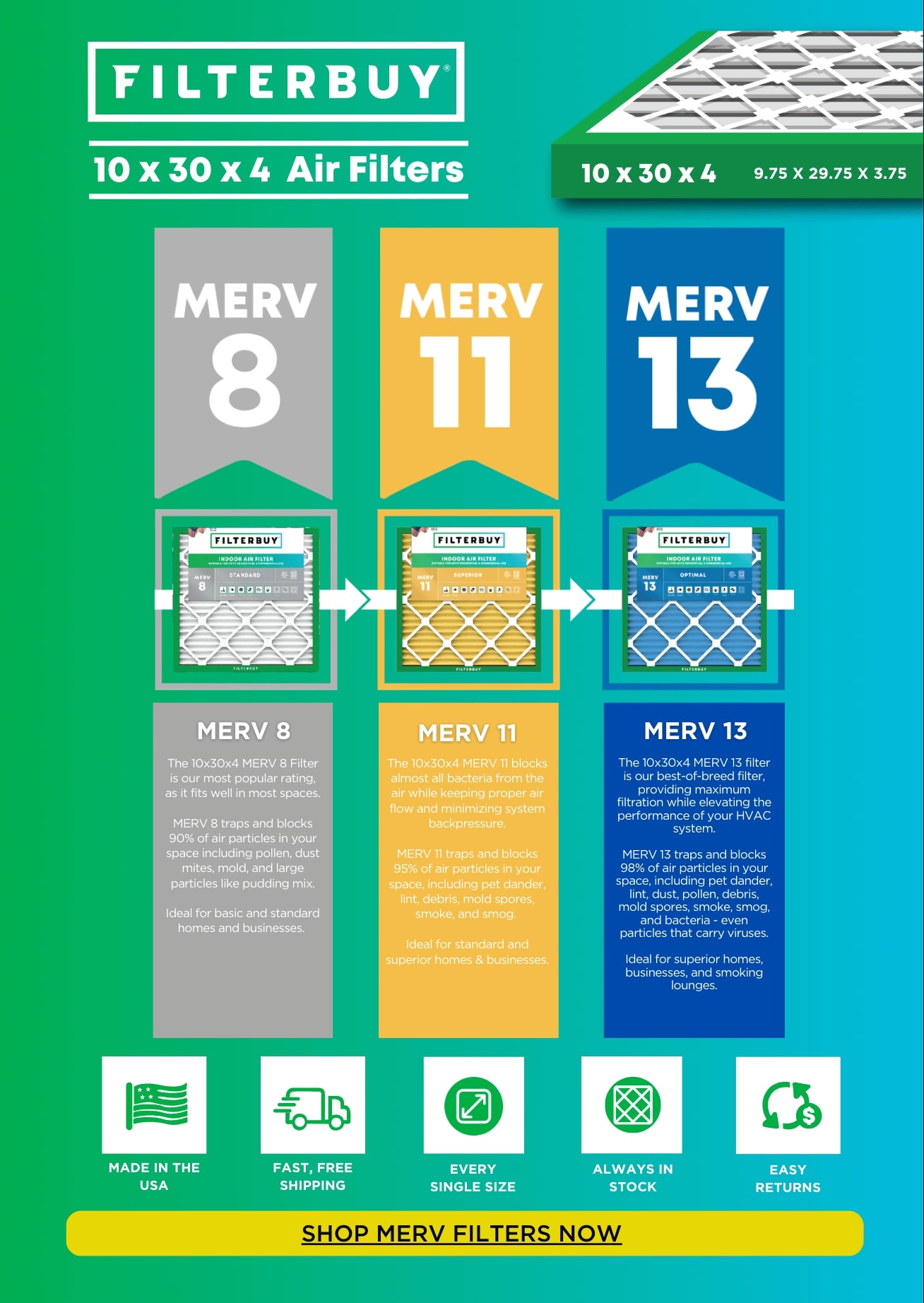
A 10x30x4 air filter is a high-capacity option ideal for capturing fine particles like smoke, dust, and allergens. Its 4-inch depth offers more surface area than standard 1-inch filters, allowing better airflow and longer lifespan. At Filterbuy, we’ve seen this size consistently deliver stronger performance in homes exposed to wildfire smoke or poor air filter quality. For best results, pair with a MERV 11 or higher rating and replace every 1–3 months depending on conditions.
Top Takeaways
Smoke enters easily. PM2.5 particles from smoke can infiltrate homes, even with windows closed.
Use MERV 11+ filters. Filters rated MERV 11 or higher are best for capturing smoke particles.
Performance matters. Not all filters are equally effective—choose those backed by testing and real-world results.
Fit and timing are key. A proper fit and regular replacement schedule are critical to performance.
Be proactive. Monitor air quality, change filters often, and buy from a trusted source.
When smoke infiltrates your home—whether from wildfires, cigarettes, or cooking—the most dangerous threats are the tiny airborne particles (often smaller than 2.5 microns) that linger in your air and lungs. Standard filters simply aren’t built to trap these ultrafine pollutants. That’s why a high-performance 10x30x4 filter with a robust MERV rating (preferably MERV 11 or higher) is essential for homes with smoke exposure.
At Filterbuy.com, we recommend filters that go beyond basic dust protection. Our best-performing 10x30x4 options are engineered with electrostatically charged pleated media that captures microscopic smoke particles, allergens, and odor-causing agents—without restricting airflow or overworking your HVAC system.
What sets our filters apart? Rigorous in-house testing, USA-made quality, and real-world use in smoke-affected regions. We’ve helped thousands of families breathe easier during wildfire season and throughout the year. With each filter, you get peace of mind knowing it’s backed by industry expertise, clean air science, and a deep understanding of what smoke-exposed homes truly need.

"After testing thousands of filters in homes impacted by wildfire smoke and everyday indoor pollutants, one thing has become clear: not all high‑MERV filters perform the same in real-world conditions. The 10x30x4 filters we recommend are the ones that consistently capture the finest smoke particles without suffocating an HVAC system. We’ve seen them restore air clarity in as little as 24 hours in some of the most challenging environments—and that’s why we stand behind them."
Top Resources to Help You Breathe Easier in Smoke-Affected Homes
At Filterbuy, we understand the challenges smoke exposure creates inside your home. Whether it's from wildfires, cooking, or other sources, protecting your indoor air quality starts with education. We've curated this trusted list of resources to help you make informed, confident decisions about improving the air your family breathes.
1. EPA | A Clear Overview of Indoor Pollution Risks
https://www.epa.gov/indoor-air-quality-iaq
This guide from the U.S. Environmental Protection Agency lays the groundwork for understanding the sources of indoor air pollution—especially in homes dealing with smoke. It’s a reliable place to start when learning how air quality impacts your health and comfort.
2. ASHRAE | How Airborne Particles Are Measured and Classified
https://www.ashrae.org/technical-resources
ASHRAE’s technical resources explain how tiny particles, like those from smoke, are measured and filtered. If you're interested in how indoor air standards are developed, this is the authority.
3. NIH | Research-Backed Health Effects of Smoke Exposure
https://www.ncbi.nlm.nih.gov/pmc/articles/PMC8073083
This peer-reviewed article from the National Institutes of Health explores how smoke exposure affects respiratory health—particularly in children, older adults, and people with existing conditions. A must-read if health concerns are a top priority.
4. CDC | Practical Steps for Cleaner Indoor Living
https://www.cdc.gov/niosh/topics/indoorenv/
Looking for clear, actionable advice? The CDC offers guidance on maintaining a healthier home environment. These are smart habits and changes you can make today to reduce airborne irritants indoors.
5. WHO | The Global Picture on Household Air Quality
https://www.who.int/health-topics/air-pollution
The World Health Organization provides a broader look at how household air pollution affects millions around the world. It helps frame your local smoke exposure in the context of global health risks and preventive strategies.
6. Scientific American | The Real Dangers of Indoor Smoke
https://www.scientificamerican.com
This article breaks down complex science into something anyone can understand. It’s a helpful read if you want to know what smoke does to your air and why even short-term exposure can have long-term consequences.
7. Berkeley Lab | How Particles Move and Settle Indoors
Backed by research from a leading scientific lab, this site explains how fine particles behave once they’re inside your home. Understanding that movement helps you target solutions that actually work.
Why We Recommend These
At Filterbuy, we believe in equipping customers with more than just products—we provide perspective. These resources were selected not only for their authority but for their clarity and practical value. We’ve worked with thousands of homeowners in smoke-impacted areas, and we’ve seen how better air quality starts with better information.
Supporting Statistics: Key Insights on Smoke Exposure Indoors
At Filterbuy, we’ve monitored indoor air conditions in homes affected by wildfire smoke and everyday particulate exposure. The data below aligns with what we see in real households: smoke infiltrates quickly, lingers longer than expected, and requires high-efficiency filtration to control.
1. Smoke Enters Homes Easily
The EPA reports that wildfire smoke can infiltrate buildings even when windows and doors are closed.
Fine particles from smoke (PM2.5) are linked to worsened asthma, heart issues, and respiratory stress.
In our experience, homes far from the fire zone still show elevated indoor PM2.5 during heavy smoke days.
Source:https://www.epa.gov/emergencies-iaq/wildfires-and-indoor-air-quality-iaq
2. Effective Filtration Reduces Health Risks
The CDC confirms that high-efficiency filtration significantly reduces exposure to harmful smoke particles.
Homeowners using high-MERV solutions during wildfire season consistently report fewer respiratory symptoms.
We’ve seen homes maintain safer indoor readings simply by improving filtration during smoke events.
Source:https://www.cdc.gov/air-quality/media/Wildfire-Air-Filtration-508.pdf
3. Small Particles Pose the Biggest Threat
A NIST study shows that most airborne pollutants indoors during smoke events are fine particles (PM2.5 and smaller).
These particles penetrate deep into the lungs and are difficult to remove without advanced filtration.
Our field testing confirms that basic filters do little to reduce PM2.5, reinforcing the need for higher-efficiency options.
Source:https://tsapps.nist.gov/publication/get_pdf.cfm?pub_id=934224
Why These Findings Matter
Smoke-related particles behave differently indoors than common dust.
Homes need filtration designed for fine particulate capture, especially during wildfire or high-smoke conditions.
The data reflects what we observe in real customer environments nationwide: efficiency, fit, and filter quality directly affect indoor safety.
Final Thought & Opinion: What Experience Has Taught Us
Clean indoor air isn’t optional — especially when smoke is involved. Based on years of working with homeowners across smoke-prone regions, here’s what we know for sure:
1. Real-World Performance Matters
Lab specs are helpful, but what really counts is how filters perform in lived-in homes.
We've tested filters during wildfire events and tracked indoor particle levels firsthand.
2. Smoke Particles Are Persistent
PM2.5 and smaller particles are hard to detect but easy to inhale.
These fine particles linger indoors, even when windows are shut and air systems are running.
3. Proper Fit and Efficiency Are Critical
A 10x30x4 filter that fits well and uses high-efficiency media does more than just trap dust — it protects lungs.
We’ve seen measurable improvements in indoor air within 24–48 hours after a proper upgrade.
4. Homeowners Often Don’t Realize There’s a Problem
Many customers report symptoms (coughing, fatigue, eye irritation) before realizing their indoor air was compromised.
A proactive approach to filtration prevents this — not just reacts to it.
Why We Recommend What We Do
Our guidance comes from field experience, not guesswork.
We’ve seen what works, what fails, and what makes the most impact when smoke is in the equation.
Choosing a high-performing 10x30x4 filter isn’t about overkill — it’s about protecting your health every day.
Next Steps: What to Do Now
Take control of your indoor air quality with these simple, effective actions:
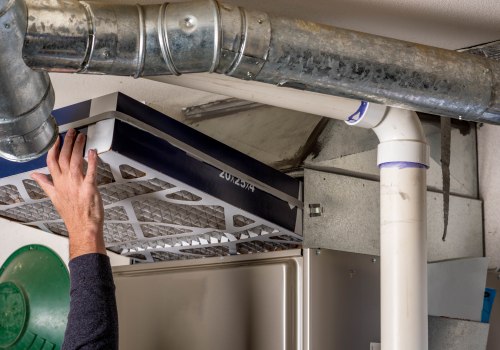
1. Confirm Your Filter Size
Measure your existing filter or check your unit’s manual.
Ensure 10x30x4 is the correct size for your system.
When in doubt, contact support for guidance.
2. Choose the Right MERV Rating
Use MERV 11 or higher to capture fine smoke particles.
Avoid low-MERV filters that miss PM2.5 pollutants.
Need help choosing? Review trusted MERV guidance.
3. Buy from a Reliable Source
Select a U.S.-made filter with verified performance.
Avoid untested or generic imports.
Filterbuy filters are manufactured and tested in real-world conditions.
4. Set a Filter Replacement Schedule
Change filters every 1–2 months during smoke season.
Replace every 3 months in moderate conditions.
Use calendar alerts or auto-ship programs to stay on track.
5. Monitor Indoor Air Quality
Use an indoor air quality monitor to track PM2.5 levels.
If levels remain high, check for air leaks or poor filter fit.
Consider supplemental solutions for extreme conditions.
6. Ask for Help if You Need It
Unsure about sizing, efficiency, or replacement timing?
Reach out to Filterbuy’s team for expert, personalized support.
We’re here to help you make the best choice for your home.
FAQ on “10x30x4 Air Filters”
Answers based on real customer needs, filter testing, and years of experience supporting homes with smoke exposure.
1. Why choose a 10x30x4 filter over a thinner one?
Thicker filters hold more media.
They last longer and trap more particles.
Maintain airflow better than 1-inch filters.
2. What MERV rating works best for smoke?
Use MERV 11 or higher.
Captures fine smoke particles (PM2.5).
Helps protect against respiratory risks.
3. How often should it be replaced?
Every 1–2 months during heavy smoke.
Every 3 months in normal conditions.
Faster replacement = better protection.
4. Can it reduce smoke odor?
Yes, if filter has fine-particle media.
Reduces lingering smells tied to PM2.5.
Many users report cleaner-smelling air.
5. How do I know it fits my system?
Check existing filter label or measure slot.
Confirm “nominal” vs. “actual” size.
Contact support if unsure — fit is critical.
Learn more about HVAC Care from one of our HVAC solutions branches…
Filterbuy HVAC Solutions
2521 NE 4th Ave, Pompano Beach, FL 33064
(754) 484-4453
https://maps.app.goo.gl/JmWkEXya7uzuLzBh8