In Clermont, that “musty after rain” AC smell is almost never random—and it’s rarely fixed by masking it with a spray or swapping one filter. In the homes I’ve evaluated with this exact complaint, the pattern is consistent: rain drives up outdoor moisture, your system pulls it in and condenses it, and then one overlooked bottleneck (usually the drain path, coil surface, or a damp return/duct section) turns that moisture into a lingering, earthy odor.
This page doesn’t just list generic causes. It walks you through how to pinpoint the source the way a tech would—what to check first, what the clues mean (when the smell starts, how long it lasts, and whether it’s stronger at startup), and which maintenance moves actually stop the problem instead of temporarily reducing it. You’ll get step-by-step fixes for the most common Clermont scenarios—like partially clogged condensate lines, wet coil biofilm, negative pressure pulling damp air from the attic/crawlspace, and humidity control gaps—plus clear guidance on when it’s time to escalate to a professional repair.
TL;DR Quick Answer
Clermont’s heat + humidity means HVAC maintenance should prioritize drainage, dehumidification, and coil cleanliness—not just a quick “checkup.”
Do this to protect comfort and prevent musty smells:
Change filters regularly (check monthly; replace on schedule).
Keep the condensate drain line clear (no standing water in the pan).
Clean the evaporator coil (dirty coils stay wet and trap odors).
Confirm thermostat fan is on AUTO (reduces moisture re-evaporation).
Watch indoor humidity (aim ~30–50% when possible; avoid >60%).
Inspect return/duct leaks (rainy days can amplify humid air infiltration).
Best cadence for Clermont:
2 tune-ups per year (spring + fall) to stay ahead of humidity, algae/clogs, and peak-season strain.
Top Takeaways
Musty after rain = moisture. Usually trapped in the AC or duct system.
Fix the source, not the smell. Drainage + coil cleanliness + humidity control.
Check the drain line/pan first. Standing water or clogs = recurring odor.
Humidity is the multiplier. Set fan to AUTO. Keep RH in a healthy range.
If it won’t quit, look for leaks/duct issues. Return leaks can pull humid air. Wet ducts can keep odors circulating.
In Clermont, a musty AC smell that shows up right after rain almost always points to moisture lingering where it shouldn’t—inside the air handler, on the evaporator coil, in the condensate drain system, or in damp duct/return spaces. Rain spikes outdoor humidity, and your AC then condenses that moisture; if anything in the system is dirty, restricted, or staying wet, odors can develop fast and get pushed through the house.
Why it happens after rain (the most common culprits)
Evaporator coil “biofilm” + wet surfaces: A dusty coil stays damp longer and can develop a mild mildew smell that’s strongest at startup.
Partially clogged condensate drain line or pan: When water can’t drain cleanly, it backs up or sits in the pan—creating a musty, swampy odor.
High indoor humidity + short cycling: If the system cools quickly but doesn’t run long enough to dehumidify, the house can smell damp even when it’s “cool.”
Return leaks pulling humid air: Leaks on the return side can draw in moisture-laden air from an attic, garage, or wall cavity—especially noticeable after rain.
Damp ducts/insulation: In humid Florida weather, condensation or moisture intrusion in ductwork can create persistent “wet towel” smells.
Maintenance fixes that work (start here)
Check the filter and return area first
Replace a dirty filter (and confirm it’s the correct size and seated properly).
Smell near the return grille: if it’s strongest there, you may be dealing with return-side moisture, microbial growth near the blower, or duct/attic air infiltration.
Inspect the condensate drain line and pan
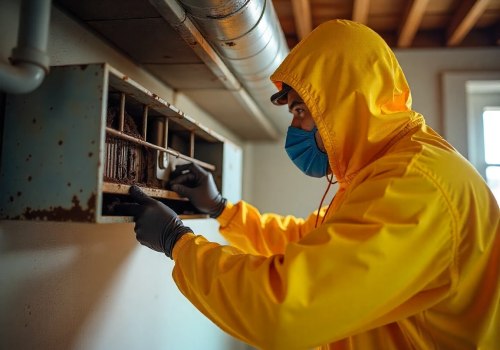
If you can safely access the air handler, look for standing water or sludge in the pan.
Clear obvious buildup and ensure the drain line is flowing. If you repeatedly get clogs, ask about adding a float switch (prevents overflow damage) and improving drain line routing/cleanout access.
Address coil and blower cleanliness
A musty smell after rain often means the coil is staying wet because it’s coated with dust.
A professional coil cleaning and blower cleaning can dramatically reduce odor and improve dehumidification.
If odors are strong and persistent, ask about inspection for microbial growth and whether a targeted cleaning treatment is warranted (not a “spray and pray” approach).
Verify humidity control (the hidden driver)
If the smell is worse on mild rainy days, humidity may be the real issue.
Make sure the thermostat fan is set to AUTO (running the fan continuously can re-evaporate moisture off the coil and amplify odors).
If indoor humidity routinely stays high, you may need system tuning (airflow, refrigerant charge, runtime) or a whole-home dehumidifier in tough cases.
How to narrow it down quickly (simple smell clues)
Smell strongest at startup, fades after 5–15 minutes: often coil/pan moisture + light buildup.
Smell constant whenever the system runs: drain/pan standing water, duct moisture, or return leaks.
Smell stronger near certain rooms/vents: localized duct insulation moisture or duct contamination in that branch.
Smell worse when it rains + windy: return-side leaks pulling damp outdoor/attic air.
When to call a pro (and what to ask for)
Bring in an HVAC technician if you notice water where it shouldn’t be, the smell persists after basic maintenance, or you suspect duct leakage.
Ask for:
Condensate drain evaluation (including slope, cleanout, and flow verification)
Coil/blower inspection and cleaning
Humidity diagnostics (runtime, airflow, thermostat settings, and home moisture sources)
Prevent it from coming back
Replace filters on a consistent schedule.
Flush/clean the condensate line periodically (especially during humid seasons).
Keep the thermostat fan on AUTO.
Schedule annual maintenance focused on coil cleanliness + drain performance, not just a quick “checkup.”
Seal return leaks and address insulation/duct sweating issues if present.
If you want the musty smell gone for good, the goal is simple: drain water fast, keep the coil clean, and control humidity—especially after Clermont’s rainy weather swings.

“In Clermont, that musty ‘after-rain’ AC smell is usually a moisture-path problem—not a mystery odor. On the calls where we solve it for good, it comes down to three checks: drain flow, coil cleanliness, and whether the return is pulling humid air from where it shouldn’t.”
Essential Resources
ENERGY STAR Maintenance Checklist: A Clear Standard for What “Real Maintenance” Includes
Use this checklist to sanity-check any tune-up: filters, coils, airflow, and performance basics—so you know what should be covered and what’s missing.
URL: https://www.energystar.gov/saveathome/heating-cooling/maintenance-checklist
U.S. Department of Energy AC Maintenance Guide: The Practical “Why It Matters” Breakdown
This guide explains the maintenance steps that most directly affect comfort, efficiency, and system lifespan—especially helpful in Florida humidity.
URL: https://www.energy.gov/energysaver/air-conditioner-maintenance
Florida DBPR License Lookup: Verify Your HVAC Contractor Before You Schedule
Confirm license status in minutes to reduce risk around unqualified work, warranty issues, or non-compliant installs.
URL: https://www.myfloridalicense.com/wl11.asp
City of Clermont Building Services: Know When Permits and Inspections Apply
If maintenance uncovers a larger repair or equipment change, this is where you check local permitting and inspection requirements.
URL: https://www.clermontfl.gov/508/Building-Services
Lake County Building Services: County-Level Guidance for Homes Outside City Limits
Ideal for homeowners under county jurisdiction who need clarity on permits and inspections if work expands beyond basic maintenance.
URL: https://www.lakecountyfl.gov/building-services
Duke Energy Florida HVAC Rebates: Reduce the Cost of an Efficiency Upgrade
When repair frequency climbs, rebates can shift the math—this resource helps you understand eligibility and next steps.
URL: https://www.duke-energy.com/Home/Products/Home-Energy-Improvement/HVAC-Replacement?jur=FL01
Florida Department of Health Mold Guidance: Address Musty Smells and Moisture Correctly
If your AC smells musty after rain, moisture control is the core issue—this guidance helps you understand mold risk and humidity best practices.
URL: https://www.floridahealth.gov/community-environmental-public-health/environmental-public-health/air-quality/mold/
Supporting Statistics
Humidity is the #1 driver behind “musty after rain.”
In odor complaints we see after storms, we start by checking indoor RH.
The EPA recommends keeping indoor humidity below 60%, and ideally 30%–50% to reduce conditions that support mold growth.
Higher RH often means coils, pans, and duct surfaces stay damp longer—and smell worse.
Sources:https://www.epa.gov/mold/brief-guide-mold-moisture-and-your-home
Maintenance has outsized impact because HVAC dominates home energy use.
Dirty coils, restricted airflow, or poor drainage can increase runtime.
The U.S. EIA reports 52% of a household’s annual energy use (2020 average) goes to space heating and air conditioning.
That’s why “small” maintenance issues can become big comfort and cost problems.
Source:
Filter habits predict whether the rest of the system is staying clean.
In recurring musty-smell cases, we often find overdue filters.
ENERGY STAR recommends checking filters monthly during heavy-use seasons and changing at least every 3 months.
Cleaner filters help reduce coil buildup that holds moisture and odors.
Source:
A practical humidity ceiling exists during operation.
If indoor RH stays high, odors can persist even with cooling.
ASHRAE guidance indicates occupied spaces should be limited to 65% RH or less (for systems with dehumidification capability).
When RH exceeds that, we treat it as a system/home moisture-control problem, not just a smell issue.
Source:https://www.ashrae.org/File%20Library/Technical%20Resources/Technical%20FAQs/TC-04.03-FAQ-12.pdf
Final Thought & Opinion
A musty AC smell after rain in Clermont usually means one thing: moisture is lingering where it shouldn’t.
Most of the time, the root cause is humidity + damp buildup + poor drainage—not “mystery air.”
What this page proves
Moisture is the trigger. Rain spikes humidity. Your system condenses water. Any bottleneck creates odor.
The usual suspects are consistent:
Dirty evaporator coil / blower surfaces holding damp dust
A condensate drain line or pan that isn’t clearing cleanly
The fixes that last are simple:
Keep indoor humidity in the recommended range
Maintain clean airflow (filters + coil)
Ensure condensate drains fast and reliably
My opinion (from how these cases actually get solved)
Musty smells are rarely “just an AC problem.”
They’re a moisture-management problem, and the AC is the messenger.
What works best is treating it like a quick investigation—not a deodorizing project:
Where is water collecting?
Why isn’t it drying?
What’s pulling humidity into the system?
When those three questions are answered, the smell usually stops—and stays gone through the next Florida rain cycle.

FAQ on HVAC Maintenance in Clermont
Q: How often do Clermont homes need HVAC maintenance?
A: Twice per year (spring + fall).
Common humid-season issues we see: drain clogs, damp coil buildup, airflow changes.
Q: How can I tell if a maintenance visit is legit (not a “quick look”)?
A: Look for measurements + documented work.
Measurements: static pressure, temperature split, system performance checks.
Physical checks: condensate pan/drain, coil inspection/cleaning as needed.
Q: Will maintenance stop a musty smell after rain?
A: Often, yes—if it targets moisture.
Usual causes: poor drainage, dirty wet coil/pan, return leaks pulling humid air.
Fix the moisture path = smell typically stops.
Q: Fan ON or AUTO in Clermont humidity?
A: AUTO.
Fan ON can re-evaporate moisture and spread damp odors.
AUTO lets the coil drip-dry between cycles.
Q: How do I choose a good HVAC maintenance provider in Clermont?
A: Use a quick vetting checklist.
Ask what they measure: static pressure, temp split, drainage flow.
Request a written maintenance checklist and completed notes.
Learn more about HVAC Care from one of our HVAC solutions branches…
Filterbuy HVAC Solutions - Miami FL - Air Conditioning Service
1300 S Miami Ave Apt 4806 Miami FL 33130
(305) 306-5027
Filterbuy HVAC Solutions - Miami FL - Air Conditioning Service